Fork Carriage is a critical structural component of a forklift truck.
Serves as the removable interface between the mast and the lifting forks, enabling vertical
load movement, load engagement, and load positioning.
1. Structural Design
The carriage is typically a welded steel frame with reinforced cross-sections to withstand high
bending moments and impact loads.
It features upper and lower roller brackets that guide the carriage along the mast channels,
ensuring smooth, low-friction vertical travel.
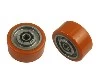
Rollers are often equipped with sealed bearings and eccentric adjustment for precise clearance
setting, reducing wear and maintaining stability.
2. Mounting Systems (Hook Types)
The most widely adopted standard is the Integrated Tool Carrier system,
classified by hook size and load capacity:
ITA Class, Hook Width , Typical Capacity
Class I 1.25" (32mm) Up to 2,000 lbs
Class II 1.5" (38mm) 2,000–5,500 lbs
Class III 1.75" (44mm) 5,500–11,000 lbs
Class IV 2.0" (51mm) 11,000–17,500 lbs
Class V 2.5" (64mm) 17,500+ lbs
Hook-type carriages allow quick fork changing without tools,
Forks are secured with locking pins or spring-loaded retainers to prevent accidental disengagement.
3. Integrated Functions Modern carriages often incorporate
Side-shift mechanism: hydraulic cylinders that shift the carriage laterally (lh/rh) ,
enabling precise load alignment without repositioning the truck.
Fork positioner: hydraulically adjusts fork spacing to accommodate different pallet widths.
Load backrest extension: a vertical steel guard that prevents stacked loads from falling backward
toward the operator.
4. Safety and Maintenance Considerations
Regular inspection of hook wear, roller condition, and lock pin integrity is essential.
Worn hooks or rollers can cause fork dropout or uneven load distribution, leading to tip-over risks.
Lubrication points are provided on roller axles and side-shift cylinder pivots.