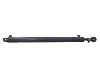
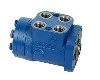
The brake master cylinder is the heart of a forklift's hydraulic braking system.
Its primary role is to convert mechanical force from the brake pedal into hydraulic pressure,
enabling the forklift to slow down or stop safely.
Feature& Function:
The Brake Master Cylinder is a critical hydraulic component. When the operator presses
the brake pedal, the master cylinder generates the necessary hydraulic pressure, which is then
transmitted through brake fluid to the wheel cylinders or calipers at each wheel.
This process is essential for safe and efficient stopping.
Working Principle:
1. Force Input: Pressing the brake pedal pushes a push rod, which actuates the piston inside
the master cylinder.
2. Hydraulic Pressure Generation: The piston moves forward, compressing the brake fluid.
The primary cup seal blocks the return port, allowing pressure to build up.
3. Brake Application: The pressurized fluid opens a check valve and flows through the brake lines
to the wheel cylinders, forcing the brake shoes against the drum to stop the wheel.
4. Release: When the brake pedal is released, a return spring pushes the piston back.
The pressure drops, and the brake fluid returns to the master cylinder.
Brake master cylinders are used in various types of forklifts, from manufacturers like Toyo,
Komat, Mitsu and tcm, In some systems, the master cylinder is paired with a brake booster to reduce
the pedal force required by the operator .