From November 3rd to 6th, 2026, the 26th Asia International Logistics Technology and
Transportation System Exhibition (CeMAT ASIA 2026) was held at the Shanghai New International
Expo Center. Hanzi mainly participated in the exhibition with accessories.
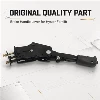
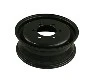
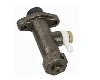
The exhibition booth was arranged by functional categories, showcasing engine series accessories,
transmission components, hydraulic components, braking series accessories, electrical components
and other core accessories for forklifts, covering both Japanese and domestic mainstream models.
These accessories correspond to the product categories with high demand from overseas
customers. Firstly, there are easily damaged parts with high inquiry and return orders, such as tires,
wheels, filters, major repair parts, which are the regular inventory for overseas wholesalers.
Secondly, there are domestic components with a large market gap and relatively stable supply chain,
represented by domestic major brand models. The inquiries in this category have increased.
It is not uncommon for orders to include components such as transmission parts, engine overhaul
part, hydraulic parts, brake parts, driving motors, side shifters, forks and electrical components.
Customers often prefer to purchase all these items from a single supplier to reduce communication
and logistics costs across multiple sources.
When overseas buyers inquire about prices, it is still the first thing they ask about. After the quotations
are competitive, the customers will then look at whether the suppliers can provide complete supplies
and whether the delivery schedules are stable. When overseas wholesalers face local market competition,
the cost pressure will be passed on to the purchasing end, making them sensitive to the quotations;
However, if the suppliers only offer low prices, frequently have stock shortages, or have fluctuating
delivery schedules, it will be difficult for the wholesalers to include them in their regular supply system.
The difficulties at the supply end mainly lie in three aspects: the customer models are diverse,
covering multiple brands with varying quality requirements; the precision of product selection and
supply chain integration is high; the delivery time constraints are strict, and a balance needs to be struck
between the available stock and the customer's personalized orders; inquiries for domestic components
have increased, and the speed of completing the product catalog affects the response capability.
The demand for Japanese brand spare parts in mature markets remains stable, and customer
recognition has not changed significantly.
There are differences in the demand intensity for these two product categories in different markets.The
same customer may also purchase cross-model products. The supply side needs to manage the product
flows of both quality systems and price ranges simultaneously.