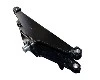
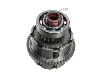
A forklift rotator is a hydraulic attachment mounted between the forklift carriage
and the forks. It enables the forks (and load) to rotate continuously or to specific angles,
typically 180° or 360°, for tasks requiring dumping, inverting, or repositioning.
Main Types:
1. 360° continuous rotator:
Full rotation for dumping or mixing; commonly used with drums, bins, or scrap handling.
2. 180° rotator:
Rotates only side-to-side (eg, ±90°) for dumping containers or emptying hoppers.
3. Rotating fork positioner:
Combines rotation with fork spreading,narrowing and side adjustment.
Parameter Value Range:
Load capacity: 1~10 tons (or higher for heavy duty)
Rotation angle: 180° or 360° continuous
Hydraulic pressure: 140–210 bar (2000–3000 psi)
Rotation speed: 4–6 RPM, The one is adjustable
Mounting class II, III, IV (ISO or OEM standard)
The attachment connects to the forklift's auxiliary hydraulic circuit.
The operator uses a third valve or electric joystick to control rotation direction and speed.
A hydraulic rotator unit (motor + gearbox) transmits torque to the fork frame,
while the carriage remains fixed.